by
Tomasz Wiśniewski
,
Warsaw’s Overlooked Modernism
Most people don't know Warsaw's pre-war architecture exists. That's partly history, partly a failure of visibility — and partly what makes working with it so interesting.
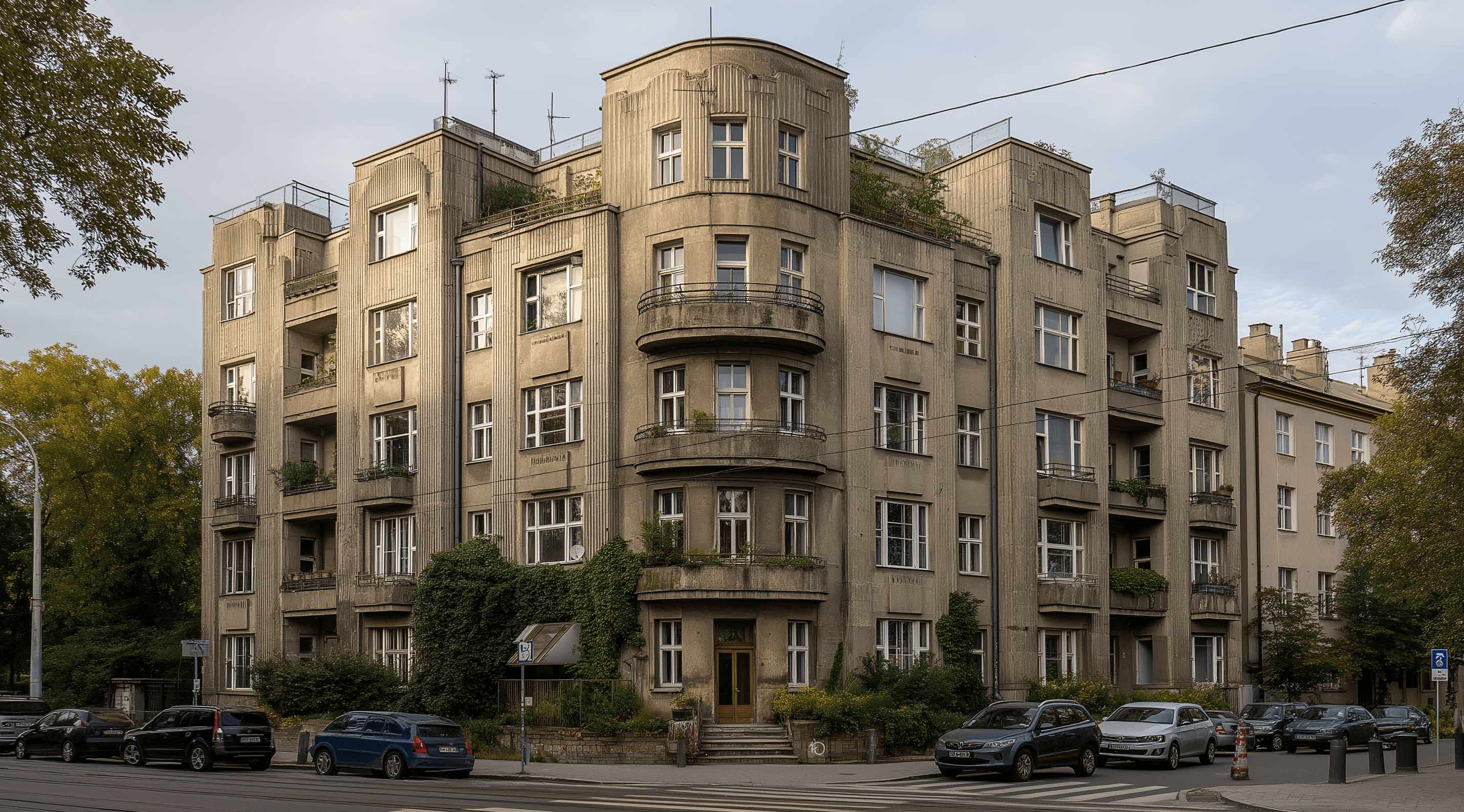
Warsaw's pre-war architecture is one of the least celebrated urban inheritances in Europe. The city lost over 85% of its built fabric during World War II, and much of what survived was subsequently obscured by decades of socialist-era construction. Finding and recognising pre-war buildings in Warsaw requires a certain kind of literacy.
But they are there. Particularly in Mokotów, Żoliborz, and Śródmieście, clusters of 1920s and 1930s residential architecture remain — mostly apartment buildings, four to six storeys, with the proportions and ornamental restraint characteristic of Central European Modernism of that period. High ceilings, wide stair halls, parquet floors laid in herringbone or basketweave, cornices in the Polish vernacular of the period.
Renovating these buildings is an act of urban archaeology as much as design. The brief is always partly about uncovering — stripping away the interventions of previous decades to find what was there originally, and deciding what to restore and what to leave as evidence of the building’s layered history.
The best renovations in this stock treat the building as a collaborator. They don’t try to recreate a moment; they work with the full accumulation of time, adding a contemporary layer that sits clearly and confidently alongside all the others.
Mon–Fri 10:00–18:00