by
Tomasz Wiśniewski
,
Terrazzo: A Material That Ages Well
Terrazzo has been everywhere for the last decade — but its second life looks nothing like its first. A material that records time, not just surfaces.
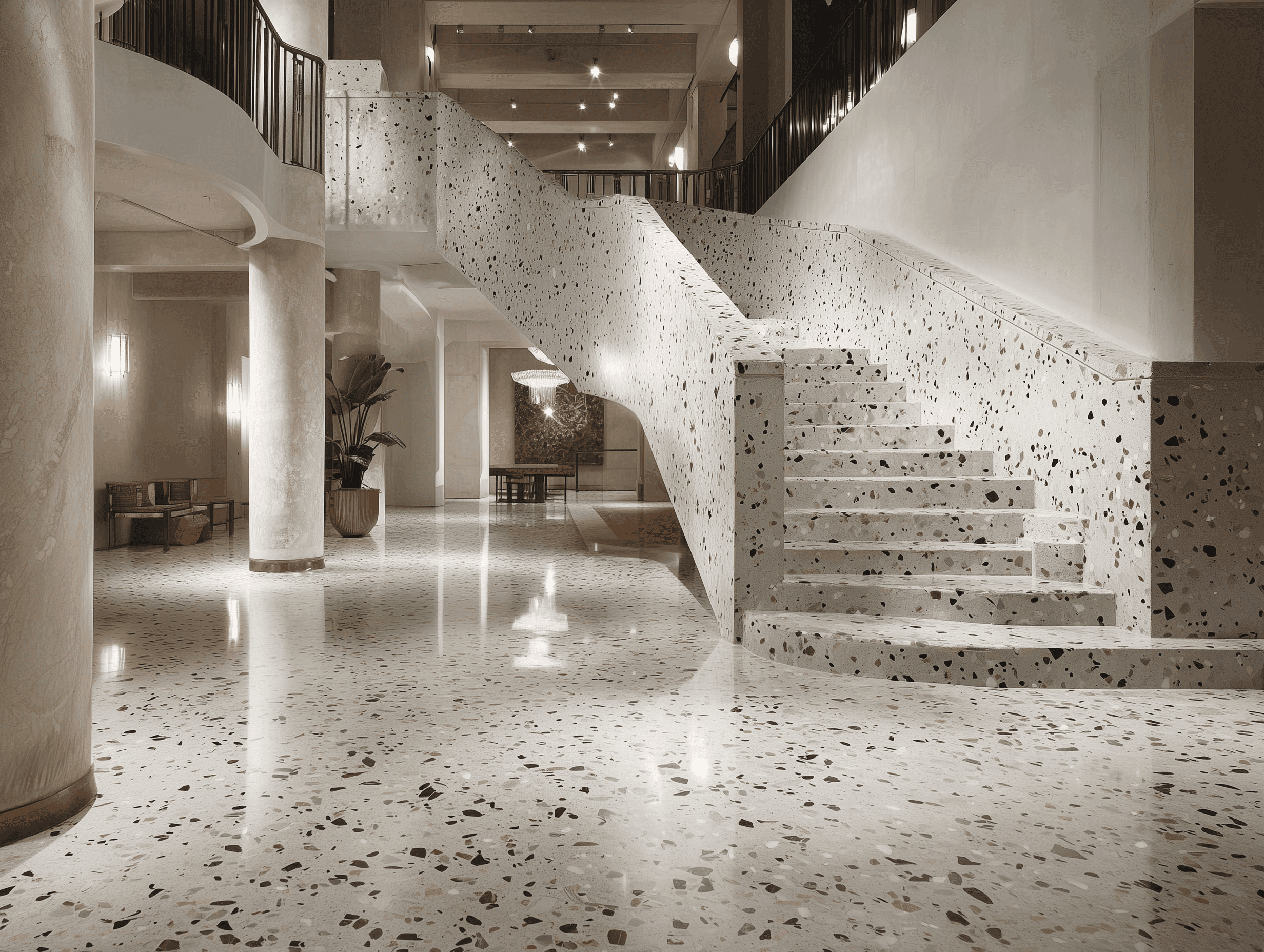
Terrazzo had a long life the first time around. From Roman floors to mid-century civic architecture, the material was everywhere — durable, affordable, and quietly beautiful. Then it disappeared into the background of taste, associated with hospital corridors and school canteens.
Its return over the past decade has been total and, at this point, well-documented. But what's less discussed is how the material has evolved in its second life. Contemporary terrazzo is not the beige-and-grey aggregate of the 1970s. Designers are working with it in deep jewel tones, with oversized aggregate chips, with brass and mirror inlay. It is being used not just on floors but on countertops, furniture, facade panels, and objects.
Part of terrazzo's enduring appeal is its relationship with time. Freshly laid, it is smooth and bright. Over years of use, it develops a patina — scuffs, a slight dimming, the ghost of a chair leg worn into the surface. This is a material that records the life lived on top of it. In a design culture increasingly interested in longevity and wear, that quality feels rare and right.
Mon–Fri 10:00–18:00