by
Karolina Wróbel
,
On Zellige: Beauty, Context, and Imitation
Zellige is over a thousand years old and suddenly everywhere. The question isn't whether it's beautiful — it is. The question is whether you're using it honestly.
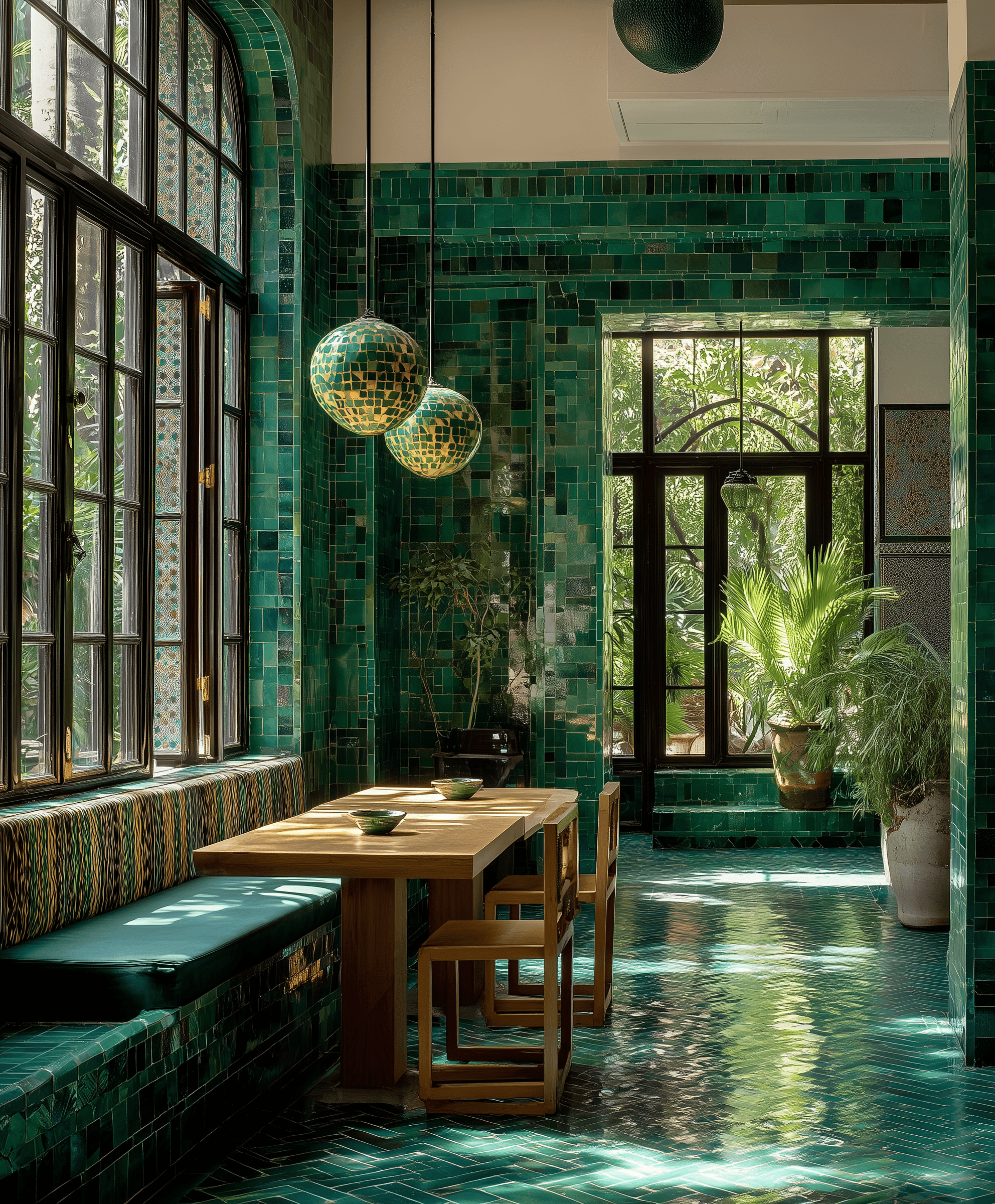
Zellige is a hand-cut Moroccan tile made from fired clay with a semi-transparent glaze. Unlike machine-cut tiles, each piece is slightly different — irregular edges, variations in thickness, glaze pooling in the corners. When laid together, these imperfections create a surface that shimmers, that catches light differently depending on where you stand.
The tile has been used in North African and Andalusian architecture for over a thousand years. Its contemporary popularity in European interiors has been rapid and, in some applications, problematic — used as an exotic backdrop in spaces that have no other connection to the tradition it comes from.
The more interesting applications treat zellige not as a signifier but as a material with specific properties worth deploying for specific reasons. In bathhouses and spas, the way its glaze holds moisture and reflects candlelight is genuinely functional. In kitchens, the depth of colour it achieves — forest greens, navy blues, deep burgundy — is difficult to match with any other tile format.
Used with honesty and restraint, it is an extraordinary material. Used as wallpaper, it is just another trend.
Mon–Fri 10:00–18:00